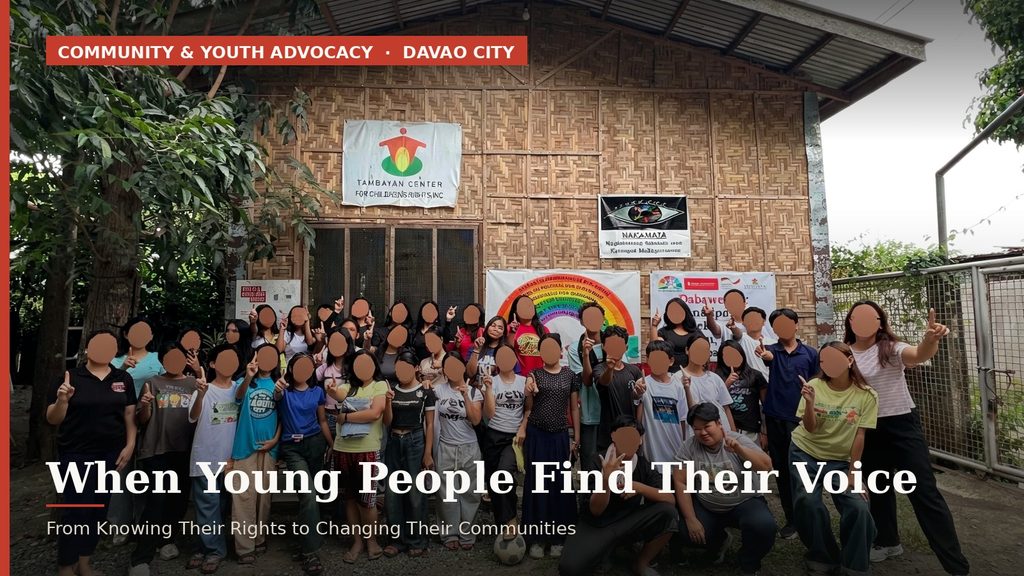
When Young People Find Their Voice: From Knowing Their Rights to Changing Their Communities
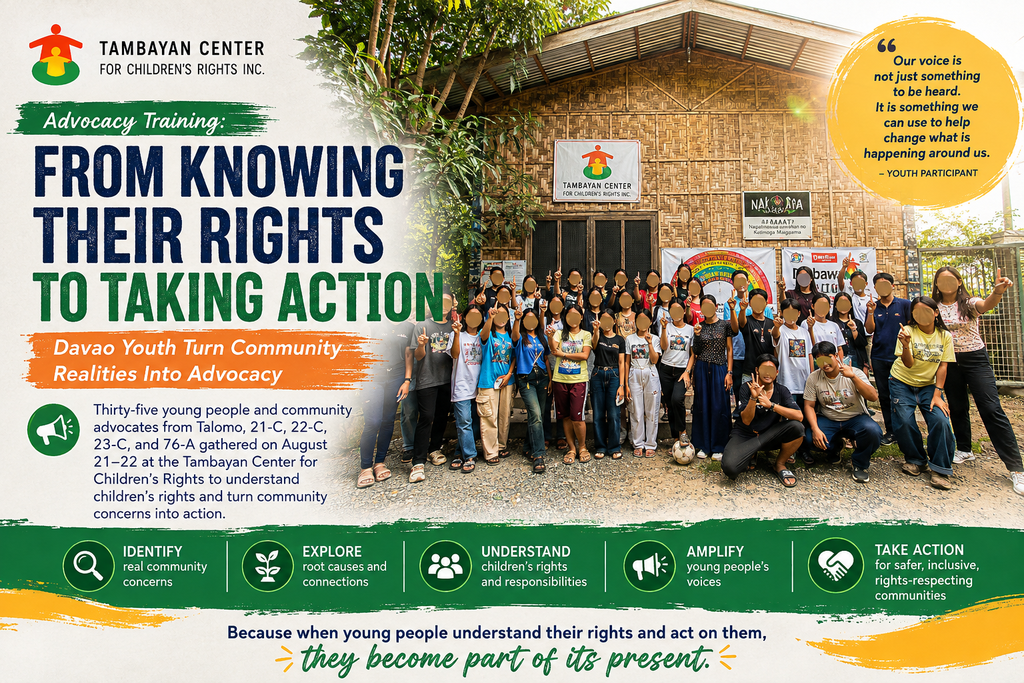
Tambayan Center for Children’s Rights · Advocacy Training, August 21–22

What happens when young people begin to look at the realities in their communities not simply as problems, but as questions of rights, responsibility, and action?
A child leaves school. A young person struggles with substance use. A family goes hungry. A teenager faces discrimination.
We often describe these as individual problems.
But what if they are telling us something bigger?
What if behind every child who drops out of school is a story about poverty, exclusion, hunger, family hardship, or a system that failed to reach them?
What if behind a young person struggling with substance use is not simply a question of behavior, but a story of trauma, peer pressure, broken support systems, or the absence of a safe place to belong?
And what if the young people who see these realities every day are not simply people who need to be helped, but people who can help us understand what needs to change?
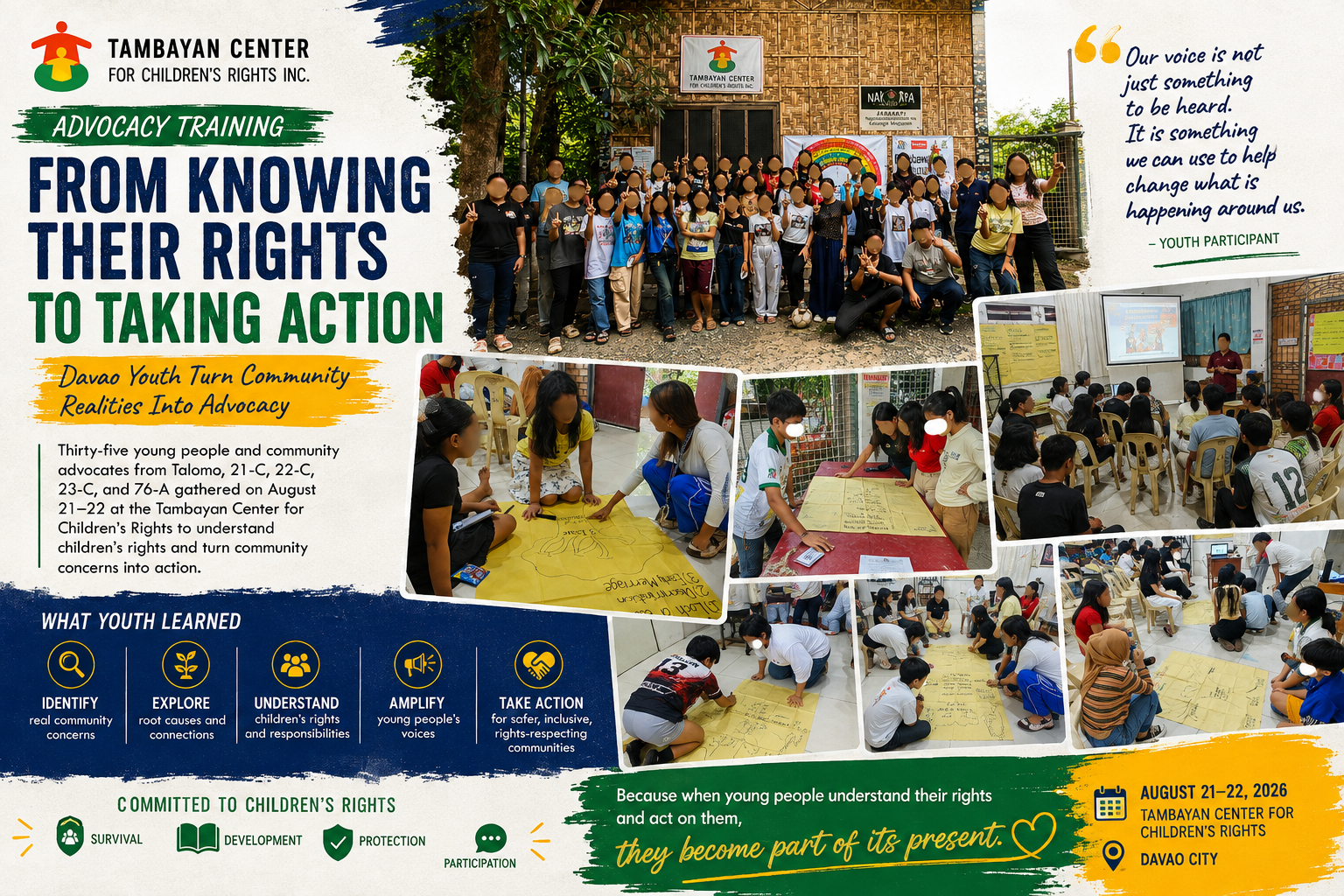
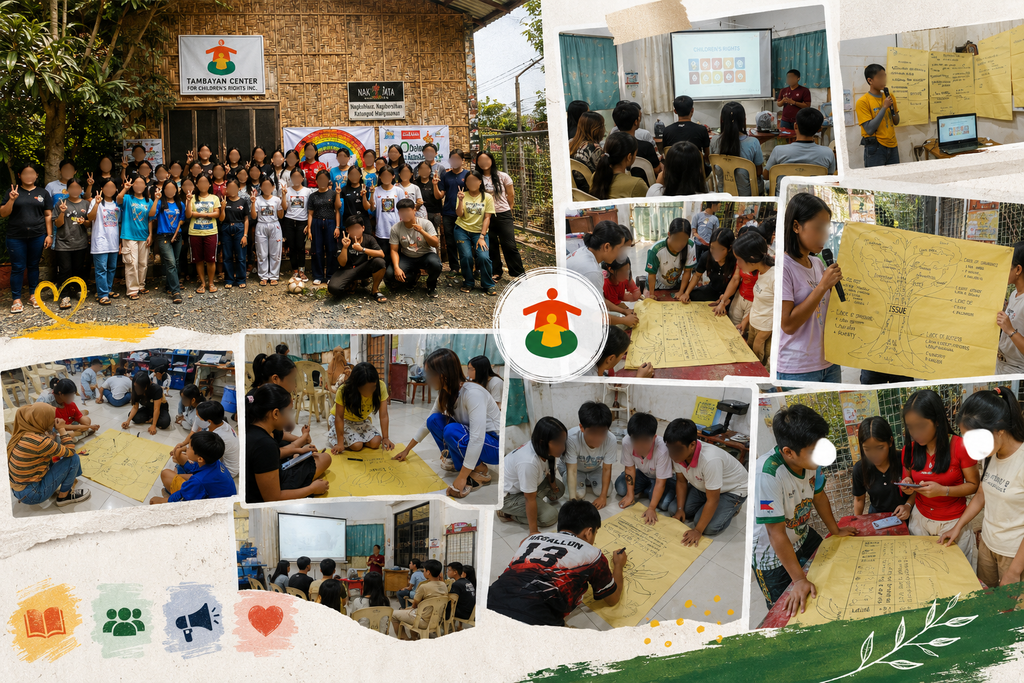
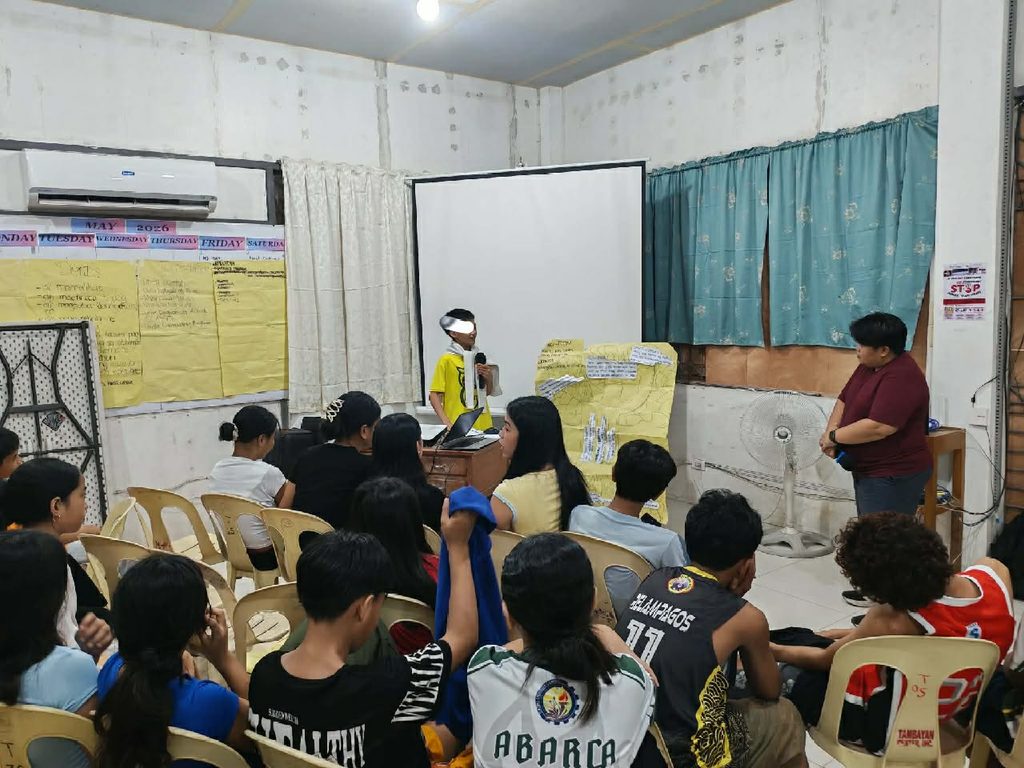
These were among the questions at the heart of a two-day advocacy training, Understanding Children and Their Rights, held on August 21 and 22 at the Tambayan Center for Children’s Rights in Davao City.
Thirty-five young people and community advocates from Talomo, 21 C, 22 C, 23 C, and 76 A came together, carrying something more valuable than any training manual: their own knowledge of their communities.
They came with stories. They came with questions. They came with experiences of what children and young people face every day.
And over two days, those experiences became the starting point for something more powerful than learning about rights.
They began to see themselves as people who can act on them.
The First Shift: Children Are Not Problems to Be Solved
For generations, conversations about vulnerable children have often begun with what adults can do for them.
Provide assistance. Give protection. Deliver services. Offer support.
All of these things matter.
But a rights-based approach asks us to go one step further. It asks us to see children not simply as recipients of kindness but as human beings who already possess rights.
The child has a right to education. A right to protection. A right to development. A right to participate. A right to be heard.
And when those rights are not realized, the question is no longer simply, “How can we help this child?”
The question becomes: What is preventing this child from enjoying their rights, and who has a responsibility to change that?
That shift may sound small. It is not. It changes the entire conversation. It changes how communities see children. It changes how institutions understand their responsibilities. And it changes how young people see themselves.
They are no longer standing at the edge of the conversation. They belong in it.
The Problems Were Never Just the Problems
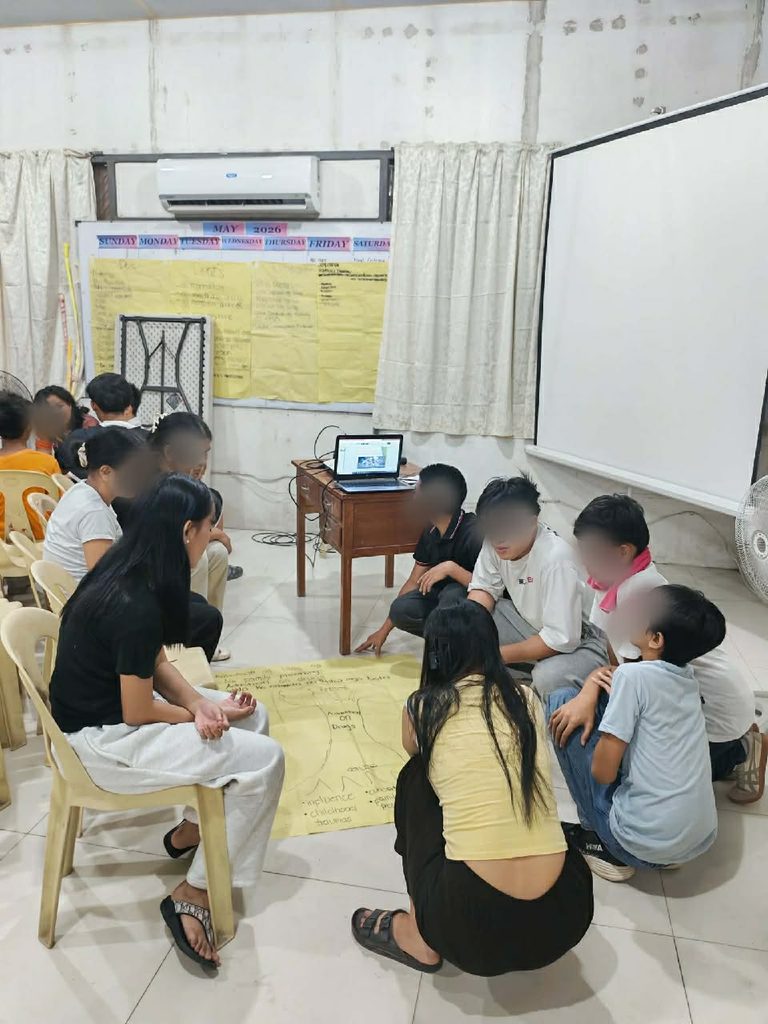
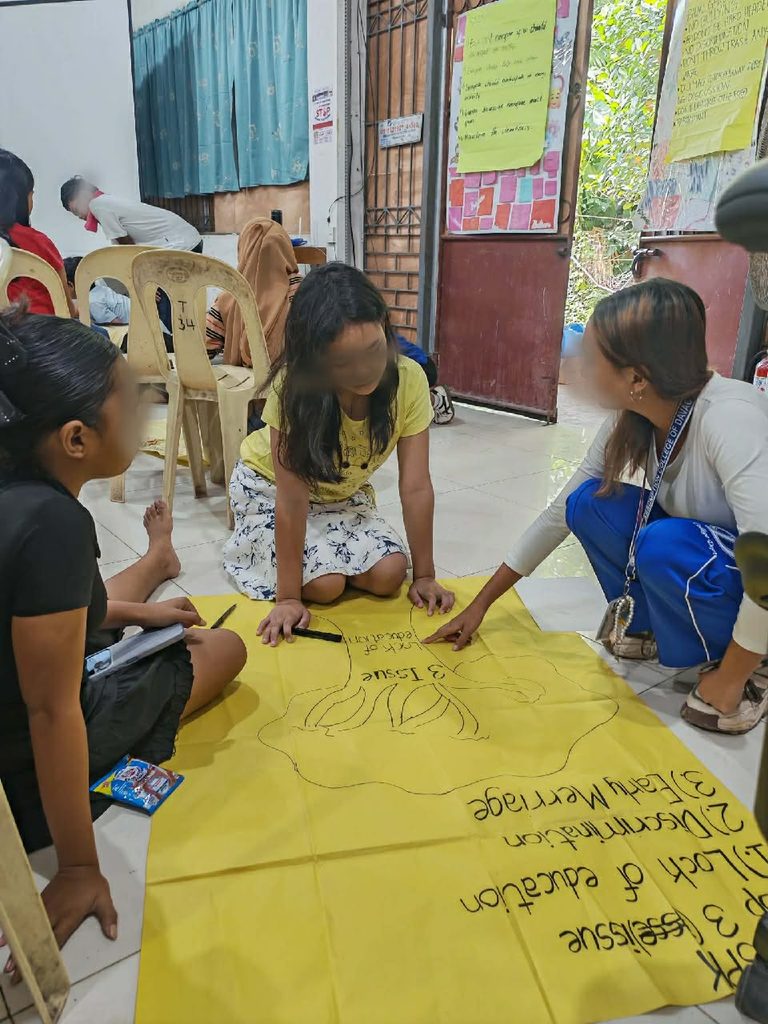
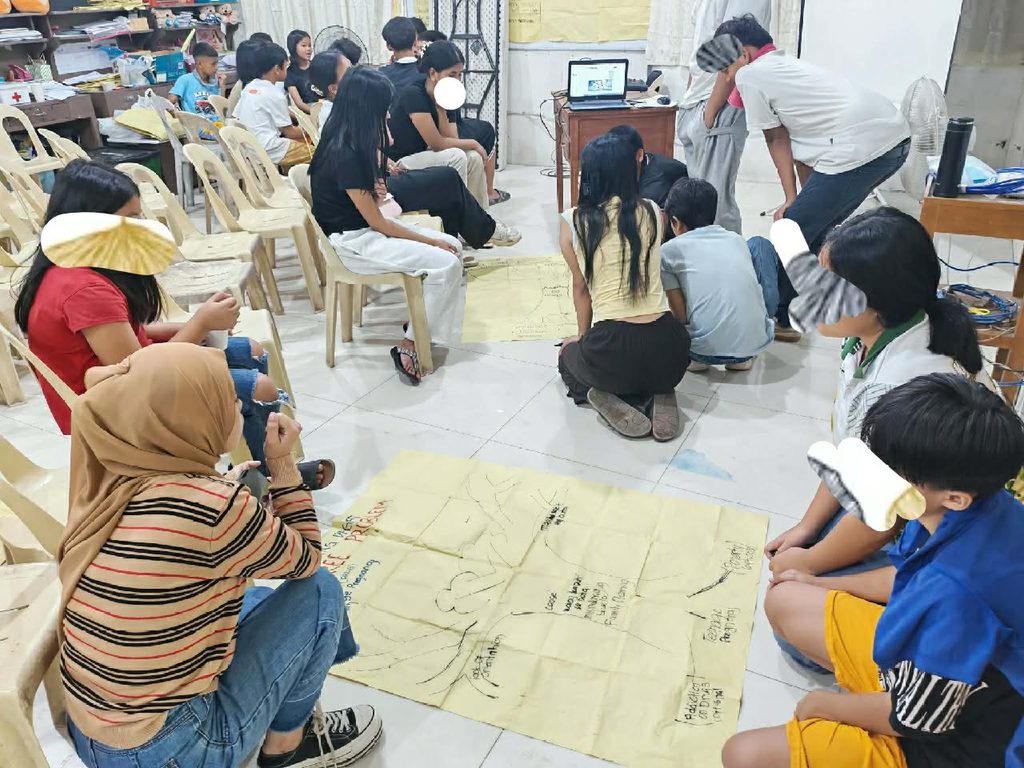
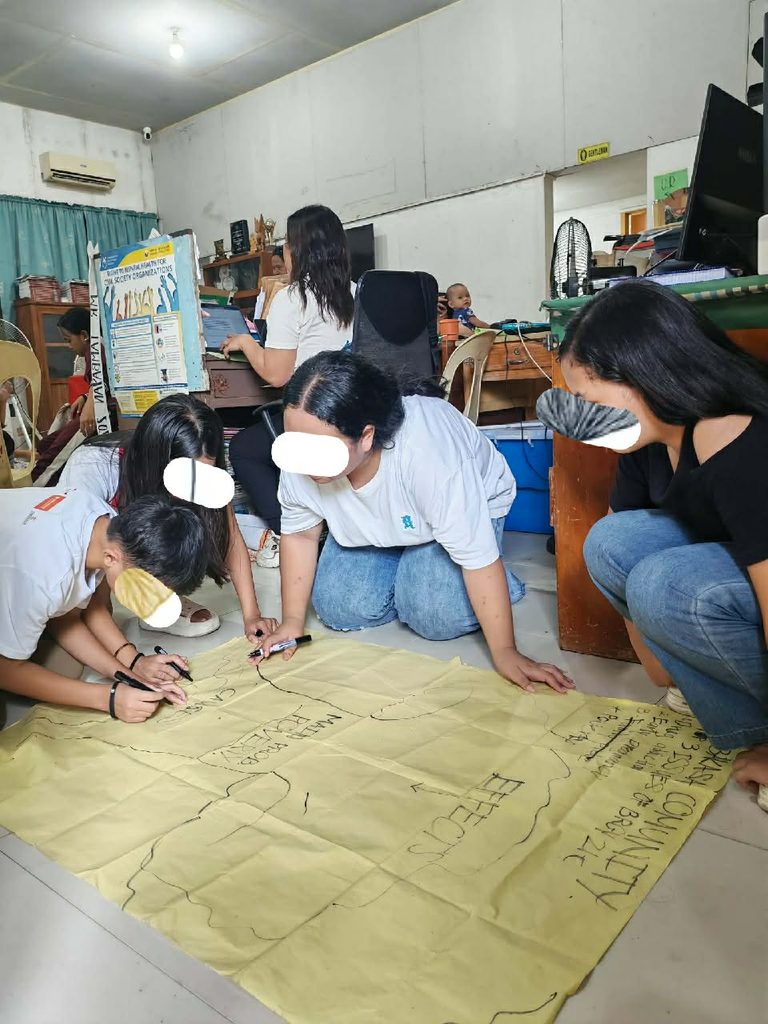
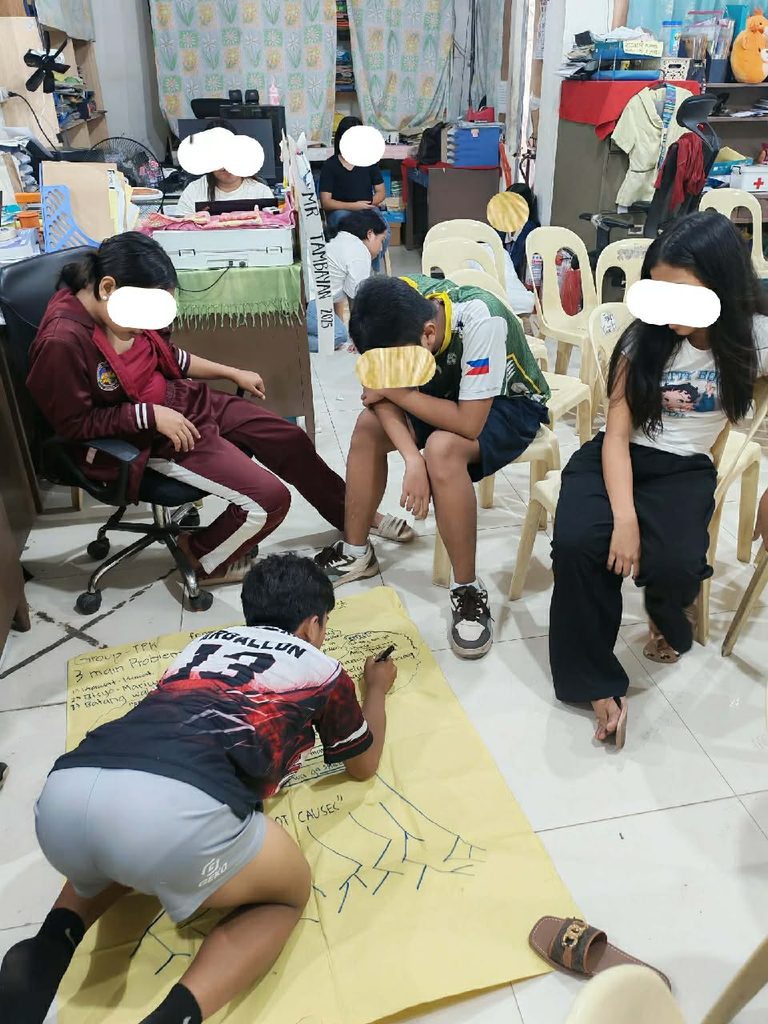
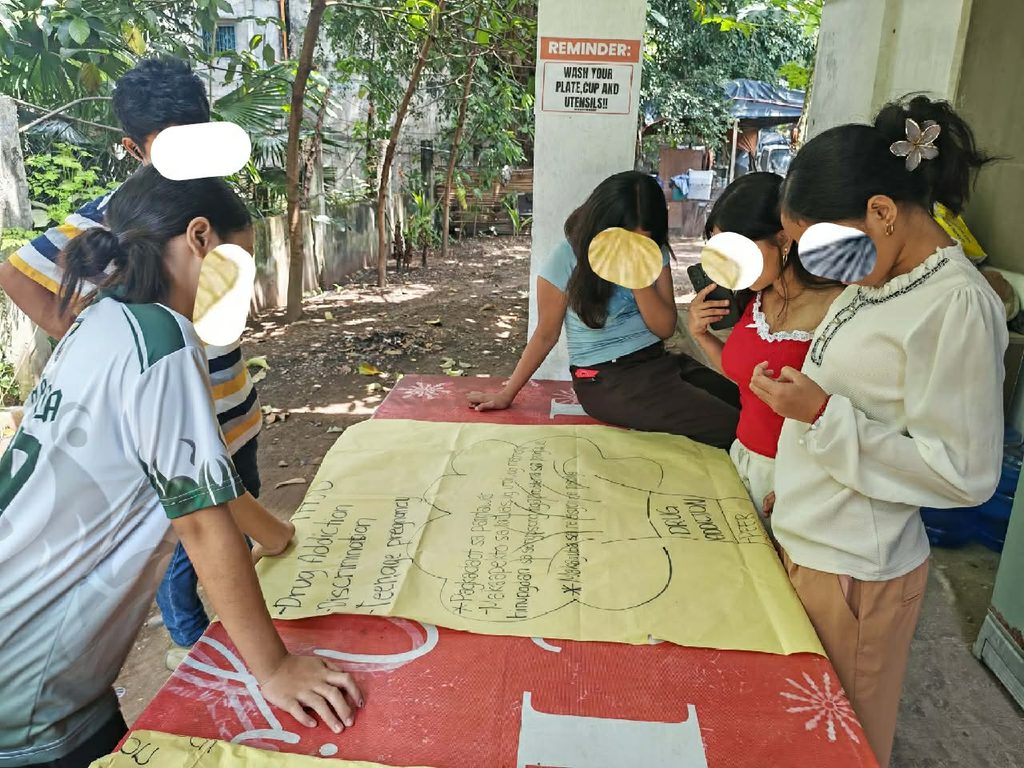
During the training, participants used problem tree analysis to examine issues affecting children and young people in their communities.
The exercise was deceptively simple. Start with a problem. Then dig deeper. What causes it? What keeps it going? What other problems are connected to it? Who is affected? Who has the power or responsibility to respond?
The answers revealed something that communities often know instinctively but do not always have the opportunity to articulate. Children’s problems are rarely isolated.
In the Badjao community, participants connected children’s limited access to education and experiences of discrimination with poverty and social barriers that can restrict opportunities.
In TAJO and Ulas 40, conversations about substance use among young people opened a much deeper discussion about peer pressure, family difficulties, trauma, and the lack of safe and supportive spaces.
In Laking Dagat, participants identified connections between generational poverty, school dropout, early pregnancy, hunger, and limited opportunities.
Different communities. Different circumstances. Different stories. But beneath them were familiar patterns.
Poverty creates barriers. Barriers create exclusion. Exclusion can limit opportunity. When opportunity disappears, children can become more vulnerable.
This is why simply treating the visible problem is not always enough.
A school dropout is not merely a number missing from a classroom. A child experiencing hunger is not merely a recipient of food assistance. A young person struggling with substance use is not merely a behavior that needs to be corrected.
Each situation can be a signal. A signal that something deeper is happening. A signal that a right may not be fully realized. A signal that a family, community, institution, or system may need to respond differently.
What Happens When Young People Ask Why?
Perhaps one of the most important things young people learned during the training was not a definition. It was a habit of questioning.
Instead of stopping at “What is wrong?” they were encouraged to ask, “What happened? Why is this happening? Whose rights are affected? Who has a responsibility to respond? Who needs to be heard? What can we do?
Those questions transform the way communities understand problems. They turn observation into analysis. Analysis into responsibility. And responsibility into action.
This is the heart of advocacy. Advocacy is not simply speaking loudly. It is understanding deeply enough to know what needs to be said, why it matters, who needs to hear it, and what change should follow.
And young people can do this. They already know more than we sometimes give them credit for.
They know which children are struggling. They know which spaces feel unsafe. They know when discrimination happens. They know which peers are being left behind. They know which concerns adults may not hear.
The challenge is creating spaces where that knowledge can become meaningful participation.
The Power of Being Heard
A young person who is listened to begins to understand something important. My experience has value. My story can reveal a problem. My question can challenge an assumption. My voice can bring attention to something others have overlooked. My participation can contribute to a solution.
That is why meaningful youth participation is more than inviting young people to attend an activity. It means creating spaces where they can speak, question, disagree, propose, create, and influence.
The two-day training became one of those spaces. The young people were not simply being told what their communities needed. They were invited to examine what they already knew.
Their lived experiences became evidence. Their observations became discussion points. Their questions became part of the learning. And their ideas became possible starting points for action.
Advocacy Begins Where People Are
On the second day, the conversation moved from understanding to action. Participants explored who the duty bearers are in their communities and how young people can communicate concerns and influence conversations around children’s rights and well-being.
The possibilities did not require enormous budgets or national campaigns. Advocacy can begin with something as ordinary as a conversation.
A young person telling a friend what they learned. A peer encouraging another young person to seek help. A community discussion about children’s rights. A social media message that challenges harmful assumptions. A creative presentation that makes an invisible problem visible. A young person asking a community leader a difficult but necessary question.
These actions may seem small. But social change rarely begins as something enormous.
It begins when someone decides that something should not remain invisible. It begins when a question is asked. When a story is told. When a person refuses to remain silent. When another person listens.
And when those voices begin connecting with one another, a conversation can become a movement.
The Responsibility Does Not Belong to Young People Alone
There is another important lesson in a rights-based approach. We cannot place the responsibility for change on children and young people alone.
Young people can speak. They can organize. They can advocate. They can participate.
But adults and institutions have responsibilities too. Families have responsibilities. Communities have responsibilities. Local leaders have responsibilities. Government institutions have responsibilities. Organizations have responsibilities.
A child should never have to carry the burden of fixing the conditions that made them vulnerable in the first place.
Youth participation should therefore not become another way of asking young people to solve adult-created problems. Instead, their voices should help adults and institutions see more clearly, respond more effectively, and become more accountable.
Young people can point to the problem. Adults and institutions must be prepared to listen and act.
From Training Participants to Community Advocates
By the end of the two days, participants had more than new information. They had a framework for looking at their communities differently.
They learned to connect everyday realities to children’s rights. They learned to look beyond symptoms and examine root causes. They learned to identify duty bearers. They learned that advocacy can take many forms.
And, perhaps most importantly, they were reminded that their voices matter.
But the real measure of a training is not what happens inside the training room. It is what happens after everyone goes home.
Will the conversation continue? Will a participant tell a friend that children have rights? Will someone raise an issue during a community meeting? Will a young person encourage a peer to seek support? Will community leaders hear concerns they had not heard before? Will another young person who has always remained silent finally feel safe enough to speak?
These are the moments when learning becomes action.
Our voice is not just something to be heard. It is something we can use to help change what is happening around us.—Youth Participant
The quote captures the heart of the training. Young people do not need to wait until they are older to participate in creating change.
They can begin with what they know. They can begin with what they see. They can begin by asking questions. They can begin by listening to their peers. They can begin by speaking when something is wrong.
And they can begin by helping others understand that children are not powerless recipients of decisions made by adults.
They are rights holders. They are participants. They are members of the community. And their experiences matter.
A Different Future Begins With a Different Question
The future of child protection will not be built only through policies, programs, budgets, and institutions. It will also be built through relationships.
Through communities willing to listen. Through adults willing to share power. Through institutions willing to be accountable. And through young people who know that their voices are not a disturbance to the conversation.
Their voices are part of the conversation.
The young people who gathered at the Tambayan Center came from different communities and carried different realities. But they left with something they can carry anywhere.
A way of seeing. A way of questioning. A way of speaking. And a way of acting.
They learned that when a child is excluded from school, we should ask why. When a young person is struggling, we should ask what happened before we ask what is wrong. When discrimination exists, we should ask who is responsible for changing it. And when children are not being heard, we should ask why the people most affected are being left out of the conversation.
These are not merely questions for young people. They are questions for all of us.
Knowing Is Only the Beginning
A rights-based community does not stop at knowing that children have rights. It recognizes those rights in everyday decisions. It notices when they are being denied. It creates mechanisms for children to seek help. It holds duty bearers accountable. And it gives young people meaningful opportunities to participate in shaping the communities where they live.
That is why this training matters beyond August 21 and 22. Because the real goal was never simply to produce 35 people who know more about children’s rights.
The goal is to help create 35 people who can help others see differently. People who can recognize the roots beneath the problem. People who can start difficult conversations. People who can connect community realities to rights and responsibilities. People who can encourage their peers to speak. People who can bring children’s voices into spaces where decisions are made.
And perhaps, most importantly, people who understand that change does not always begin with power.
Sometimes it begins with one person who sees something others have learned to ignore and decides to speak.
The young people of Davao are learning to do exactly that. They are not waiting for the future to give them permission to participate. They are beginning now.
Because knowing your rights is powerful. But recognizing when those rights are at risk is more powerful. Finding your voice is powerful. But using that voice for someone who may not yet have one is more powerful.
And when young people are given the knowledge, confidence, safety, and space to act, they do not simply become the future of child protection.
They become part of its present.
An Engaging Blog Post
WOW,Very wonderful
The content is really great
I AM BACK AGAIN